Jul 13, 2011

Shortlisted Designs - Fujitsu Design Award 2011

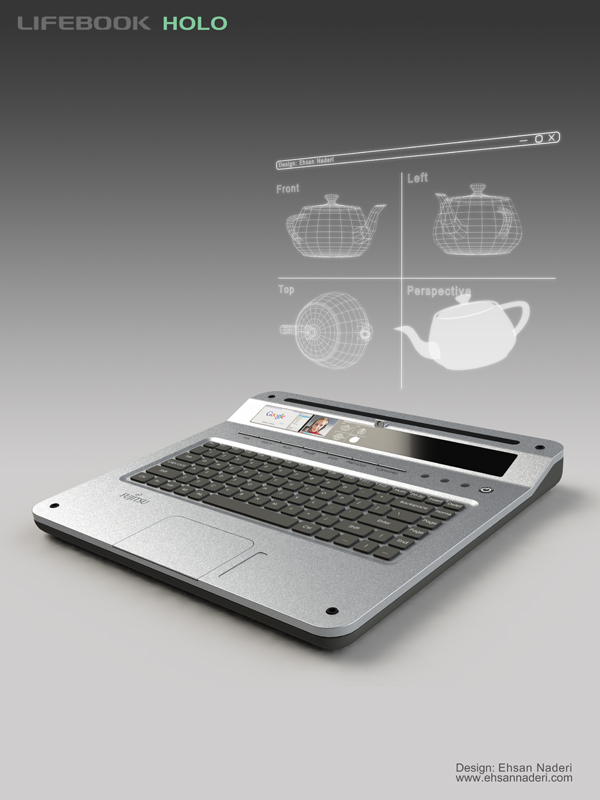
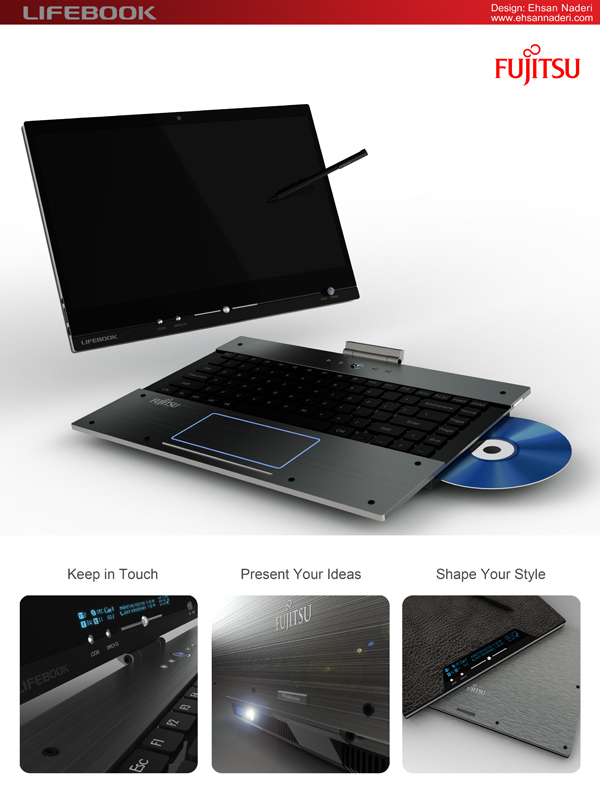
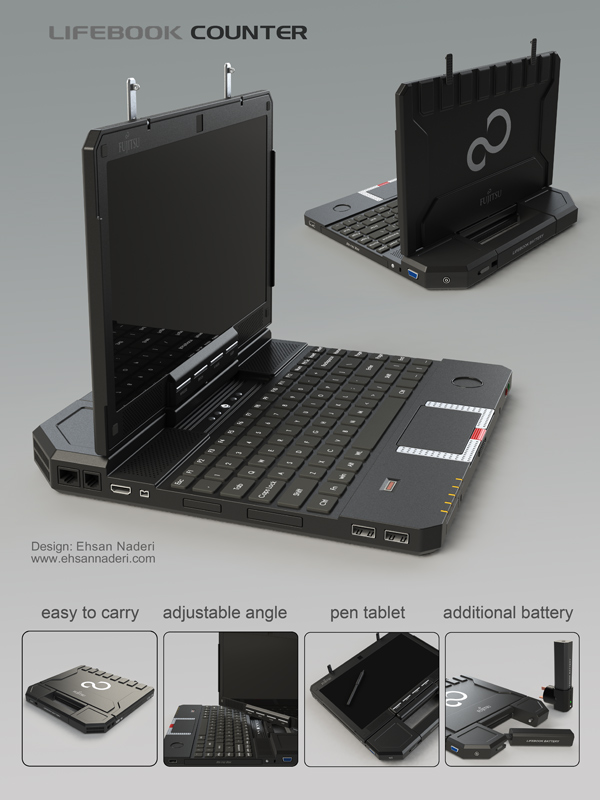
Last month, my three different designs were selected for the shortlist of Fujitsu Design Award 2011, A Life With Future Computing. Here are the images of my works:
The design addresses people who want to replace their PC with high performance, ultra portable and barrier free internet access technology in business laptops market segment   
Construction engineers, quality control staff, gamers and everyone who works on move and needs extended battery life are market segments   
3D Hologram images provide more accuracy and enhance workflow -The angled OLED display shows the current open windows concurrently

May 25, 2011

My Favorite Song: You're The Nearest Thing to Heaven (Johnny Cash)


I have sailed the peaceful waters of the ocean deep and blue
I held my breath and watched the western sunsets golden hue
I've flown above the mountain peaks and valleys wide and green
But you're the nearest thing to heaven that I've seen

You're the nearest thing to heaven yes you are
I have searched for happiness so long and far
But my search for love was through the day that I found you
Cause you're the nearest thing to heaven yes you are

I confess that I've been tempted by a luring magic charms
When the smile was flashed my way and stood before two open arms
But I turned and walked away because I love you like I do
You're the nearest thing to heaven darlin' you

You're the nearest thing to heaven...
[ guitar ]
I have watched the silver raindrops fall to earth to cool the day
Watched the rainbow at twilight when the clouds had blown away
I love the pretty flowers but they cannot buy the worth
Cause you're the nearest thing to heaven on this earth

You're the nearest thing to heaven...

May 24, 2011

I Love Rio de Janeiro

Rio is known for not only the natural beauty of its surroundings, but the natural beauty of its people as well. Their beauty is much more than physical; most possess an internal joyfulness recognized through their welcoming smiles. Cariocas are known especially for their lighthearted attitude (Cariocas claim São Paulo is for work, while Rio is for play). They joke about everything, which can catch you off guard when some of the topics can seem a bit politically incorrect. However, they usually mean no harm with their words- humor is just a main way of dealing with things, whether good or bad.

Mar 7, 2011

"Form and Function - The Battle" The Porsche Design image film

The Porsche Design Group presents its image film, entitled “Form and Function - The Battle”. The focal point is an offbeat portrayal of the philosophy of the luxury brand staged by Hollywood actors Billy Zane and Karel Roden.


The unusual duel based on the design philosophy of Porsche Design takes place in a completely dark room. The aim of the film is to eliminate the mistaken notion that form always simply follows the function. In the ideal world of Porsche Design, the two meet at eye level. One does not work without the other, neither they follow each other. A truly excellent product fulfils both of these demands. In the four minute film Form and Function fight ceaselessly over the importance of their tasks. They create a friction which is essential to allow the creation of the very best product in the end.
The products themselves only feature in cameo roles in the film. The focus remains on the cynical and entertaining duel of words between Form and Function. Homage to the design philosophy of Professor Ferdinand Alexander Porsche, the founder of the luxury brand Porsche Design, and his motto: “If you analyze the function of an object, its form often becomes obvious.” Instead of a piece of advertising, they have created advertisement which brings the purist, functional and timeless cornerstones of the brand to the fore - and manages to do so without mentioning them once. 

source: www.porsche-design.com

Mar 6, 2011

Pininfarina Wrist Watch

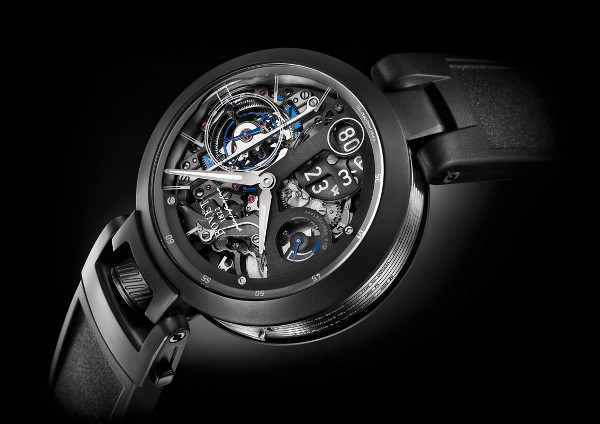
The Italian design firm Pininfarina is responsible for the design of some of history’s most beautiful automobiles.  In the last 80 years, Pininfarina has crafted the designs of many cars for brands like Ferrari, Maserati, Rolls-Royce, Alfa Romeo and more.  While Pininfarina have dabbled a bit outside of the realm of the sports car, the Bovet Ottana Tourbillon is Pininfarina’s latest foray into the world of timepieces.


The Pininfarina Bovet Ottana Tourbillon watch is a black-and-bold timepiece, held on a chain or around the wrist, with a busy, gravity-defying interior just like the automobiles of their past.  The watch was designed for the Swiss watch company Bovet 1882, an intricate reflection of decades of micro-engineered history for a strong and storied brand.  Pininfarina’s take on the tourbillon watch is a success in execution, a beautiful and bold two-faced timepiece crafted for only the most wealthy of collectors.

Falling in Love with Renault DeZir

DeZir stands out as an illustration of the brand's commitment to more emotional styling. DeZir's sensuous lines and bright red finish express passion. Powered by an electric motor, DeZir is proof that environmental concern and a love for cars are by no means incompatible.


DeZir is the first project to be led by Laurens van den Acker and marks the implementation of the strategy based on the notion of 'life cycle'. The first step involves falling in love, an experience that is perfectly illustrated by DeZir's powerful, sensuous styling and bright red finish; red being the colour associated with passion.
The result is a two-seater coupé which is both sculptural in spirit yet perfectly harmonious. DeZir's shape features prominent wheel arches that accommodate 21-inch wheels, the design of which took its inspiration from the notion of movement.

DeZir's front end features a full-width air-intake which strikes out either side of a large, vertically positioned Renault logo that proudly displays the car's brand pedigree. Meanwhile, the chrome finish
of the diamond-shaped logo contrasts with the dark aspect of the grille to express the statement still further.

The front-end design previews the new front-end identity that is poised to become a feature of all Renault models in the future.

source: www.renault.com

Mar 5, 2011

Google Introduces Plugin To Sync Microsoft Office With Google Docs

Google is launching a new plugin for Microsoft Office called Cloud Connect, which will tie Google Docs directly into the Microsoft Office Suite, free of charge. The plugin supports Microsoft Word, PowerPoint, and Excel, and it’s a big deal for Google’s strategy with Docs. The new product is going live for Apps for Business customers today as part of a preview program (sign up here); everyone else will get it soon.
The new plugin is a result of Google’s acquisition of DocVerse back in March. Installing the plugin should be fairly simple; the download takes around thirty seconds, and the installation process doesn’t take much longer. Once you’ve installed it, you’ll notice a new ribbon toward the top of the Office UI, which gives you a Google Docs link for the document you’re currently working on, as well as a notification to let you know when it’s been synced with Google’s servers. Documents being edited locally save to your Google Docs account whenever you hit the ‘Save’ button, but unlike the normal Google Docs web editor, changes aren’t saved as you type them. Google Docs product manager Jonathan Rochelle says this is done because of user expectations — Office has always required that you hit the Save button to save (safety recovery versions notwithstanding) so it makes sense to leave it this way.
Multiple people can edit the same document and have their changes synced with each save (hooray for the cloud). But because these changes aren’t reflected in real-time, there’s the potential for conflicts — I could edit a PowerPoint slide to say one thing, and my coworker could put something else on the same slide. Google deals with these conflicts by presenting users with an alert prompting them to choose which version they’d like to save; if they want to go back and switch again later, they can using the document’s version history.
There is one significant caveat to the integration with Office, if you save a document from PowerPoint to Google Docs, and then edit that file using the Google Docs web editor, you will not be able to sync those changes back with the native version of the file. You’ll be able to generate a new PowerPoint file that reflects the changes, but they won’t sync automatically.
Combined with editing capability for mobile devices, Google Docs is looking more attractive. If you are are a Google Docs user, share your experience with us in the comments section below. And, as usual stay tuned for more news and info by following us on Twitter and/or by subscribing to our RSS Feed.

Dec 20, 2010

Mobile Web Users Will Outnumber PC Based Web Users by 2012

Mobile Web will outgrow the PC Based Web
Lets take a look at developing countries, like India. 90% of internet users in India accessed the internet through a mobile device. The reason for this is mainly no traditional infrastructure, for pc based web access. Personal Computers are very high in price compared with average earnings.
This opens the way for more easily accessible cellular phone. The cellphone can be used to access web in rural areas where no infrastructure exists. The cellular phone offers more affordability and is easily transported. This trend is not limited to India. China also has shown a dramatic surge in mobile internet users. Phillipines the same story massive amounts of mobile internet users. Indonesia and the list goes on.
The hard truth is in most developing countries traditional internet access is very limited and inaccessible to the masses. The mobile web changes this and opens the way for many to get online.
Asia is expected to be the largest mobile web market as early as 2011. Japan has excelled in this industry producing many technology breakthroughs. The Japanese have embraced the mobile web. Japan still has a very large PC based web following as well.
Africa is another continent and many Africans only hope of getting online will be with a mobile phone. The same problems with infrastructure and very limited traditional internet access. Mobile web offers the solution and many are embracing the technology.
Huge world markets are opening and major companies have taken notice. Many well known brands have started with mobile websites and marketing campaigns. It is expected that by 2014 mobile internet users will way outnumber traditional web users.

By Chad J Peterson 

Sep 21, 2010

Innovative Product Design (2010 red dot award)

The spiral can be found everywhere in nature, in both animate and inanimate objects. An outstanding example is the shell of the marine creature called Nautilus, but fern leaves too first wind around the stem in a spiral shape, before growing further to unfold. Johann Wolfgang von Goethe even developed the idea of a spiral tendency in all vegetal forms, “according to which, in combination with the vertical tendency, each shape, each new leaf or petal of a plant obeys the same basic rule of metamorphosis.” The design of this eyewear series too is inspired by the shape of a spiral, translating it into a delicate design  it features sensuously appealing functionality, yet at the same time also presents a new approach towards the understanding and construction of eyewear.
The eyewear is focused around a spiral hinge of avant-garde appeal that is fascinating to almost any beholder  it makes the hinge look like a refined accessory, but actually it the basic design element. In their search for a form of reduced complexity, the designers came up with the idea of designing a hinge using the principles of helix geometry. This resulted in a dynamic form language for an eyewear that works completely without screws. The working principle of the helix-shaped hinge is convincing and attaching the temple follows a few logical steps: the spiral temple is simply attached to the front by placing the tip of the temple in the top hole in the front and turning it three times. Once in place, the design of the spiral-shaped hinge restricts the temple from opening more than 90 degrees, providing a safe fit. By translating a basic principle found in nature into a design shape, the helix series embodies a new and fascinating approach in eyewear design complexity reduced through a basic shape.

New BMW 6 Series and Aston Martin DB9 Comparison

The Concept 6 Series shows that the next generation BMW coupé will be a lot less controversial than the current car, taking obvious inspiration from the classy looks of the new 5 Series.

Sep 20, 2010

Product Positioning and Market Segmentation

Product Positioning

Product positioning involves tailoring an entire marketing program—including product attributes, image, and price, as well as packaging, distribution, and service—to best meet the needs of consumers within a particular market segment. In this way, product positioning is part of the overall process of market segmentation, but involves a narrowing of focus. "Segmentation analysis tells us how the market is defined and allows us to target one or more opportunities," Glen L. Urban and Steven H. Star wrote in their book Advanced Marketing Strategy. "Product positioning takes place within a target market segment and tells us how we can compete most effectively in that market segment."
The key to product positioning is understanding the dimensions consumers use to evaluate competing marketing programs and make purchase decisions. It may be helpful for small business managers to create a graph in order to map consumer perceptions along several different dimensions. Once consumer perceptions are understood, the next step is to select the best positioning for the product and take steps to align the marketing program behind this positioning choice. Some examples of possible positioning choices include quality, reliability, and unique features or benefits. Before delving into product positioning further, it may be helpful to understand the process and goals of market segmentation.
BlackBerry Product Positioning Document


Market Segmentation

Market segmentation is the science of dividing an overall market into key customer subsets, or segments, whose members share similar characteristics and needs. Because it involves significant market research, market segmentation can be costly. But it is particularly important for small businesses, which often lack the resources to target large aggregate markets or to maintain a wide range of differentiated products for varied markets. Market segmentation allows a small business to develop a product and a marketing mix that fit a relatively homogenous part of the total market. By focusing its resources on a specific customer base in this way, a small business may be able to carve out a market niche that it can serve better than its larger competitors.
In general, customers are willing to pay a premium for a product that meets their needs more specifically than does a competing product. Thus marketers who successfully segment the overall market and adapt their products to the needs of one or more smaller segments stand to gain in terms of increased profit margins and reduced competitive pressures. But the potential gains offered by market segmentation must be measured against the costs, which—in addition to the market research required to segment a market—may include increased production and marketing expenses.
In their book The Portable MBA in Marketing, Alexander Hiam and Charles D. Schewe identified six steps that companies should take in the market segmentation process. The first step is to determine the boundaries of the market. In completing this step, a marketer should use a formal business plan to develop a broad definition of their business, and then consider the offerings of both direct and indirect competitors to gain information about the basic needs of consumers in the market. The second step in the process is to decide which variables to use in segmenting the market. Many companies fall into the trap of collecting data on as many variables as possible and then attempting to sort through it later to draw meaningful conclusions. Instead, Hiam and Schewe recommend that marketers use their knowledge of the market to select a few relevant variables in advance. This approach is generally less expensive and will likely provide more useful results.
The third step in the market segmentation process is actually collecting and analyzing data, which involves applying market research tools. The goal in analyzing the data is to identify market segments that are internally homogeneous, yet are distinctly heterogeneous with respect to other segments. The fourth step is to develop a detailed profile of each market segment, which involves selecting those variables that are most closely related to consumers' actual buying behavior.
The fifth step in the market segmentation process is to decide which segment or segments to serve. In targeting a particular segment, a marketer should look for opportunities (i.e., customers with unsatisfied wants and needs) that provide a good match for the organization and its resources. It is important that the marketer consider not only the size and potential profitability of a market segment, but also whether the company's skills, technologies, and objectives would enable it to meet the needs of that segment better than its competitors.
The three segments with mobile application user (Adapted from Mace, 2007)  

Understanding Consumer Perceptions

Product positioning—which is the sixth and final step in the market segmentation process—involves developing a product and marketing plan that will appeal to the selected market segment. In order to position a product effectively, a small business must identify the attributes that are most important to consumers in the segment, and then develop an overall marketing strategy that will attract consumers' attention. Positioning can be usefully applied during the earliest stages of product design, when a company first identifies who its target customer will be in terms of demographic, geographic, and behavioral characteristics.
A number of tools exist to help marketers understand the consumer perceptions that underlie purchase decisions. One such tool, a perceptual map, is a graph that can portray various product positioning options in a visual manner. Marketers can create perceptual maps from market research data in order to identify consumer needs that are not being fulfilled. For example, say that consumers were asked to rate home computers on the following attributes:1) ease of use, 2) availability of service, 3) processing speed, and 4) data storage capacity. These four attributes could be combined into two perceptual dimensions:1) utility (consisting of ease of use and availability of service), which would appeal to non-experts who needed a basic computer for business or personal use; and 2) technical (consisting of processing speed and storage capacity), which would appeal to experienced computer users who wanted the latest in technology. Then each brand of home computer could be represented on the graph according to consumers' perceptions of the product. If most computer manufacturers touted their products' technical attributes, there might be an opportunity for a new market entrant who emphasized ease of use and service.
However, it is also important to understand the relative importance that consumers place upon the different dimensions. In the home computer market, for example, consumers ultimately want both utility and technical characteristics, but vary in the importance they place upon each product dimension. "The implications of these importances for positioning are significant," according to Urban and Star. "It is necessary to understand preference differences within the targeted market segments because they are important in selecting a position for a brand and in determining the competitive structure within the segment. When preferences vary within a segment, positions and physical product features may vary considerably. If preferences are relatively homogeneous within a segment, the positions of competing brands will be relatively similar, and the quantity of advertising and promotion will be the critical competitive weapons."
It is also important to note that price is not represented in the home computer perceptual map, whereas price definitely has an effect on the final purchase decision made by consumers. Marketers can reflect the importance of price by adding a dimension to the perceptual map, so that it becomes a cube, or by dividing the dimensional coordinates of each brand by its average price. The resulting map would show "utility per dollar" and "technical attributes per dollar," or the tradeoffs consumers make between the original dimensions and price. Finally, small business owners need to consider the fact that perceptual maps show "overall dimensions of evaluation and not detailed features," as Urban and Star noted. "Feature selection is critical in positioning, however, because features are an important determinant of overall perception and choice." In fact, product features influence both consumer perceptions and product pricing.

Positioning Options

Once marketers have mapped consumer perceptions of competing brands and gained an understanding of the target segment, the next step is to select a position for their products. In positioning a product within a market segment, marketers should try to maximize the share of consumer choices attained by their product in order to achieve long-run profitability for the firm. Strategies that can help marketers to maximize share include adding features desired by consumers or advertising to improve consumer perceptions. Both of these strategies can be costly, however, so it is important for companies to balance the cost of making such expenditures with the payoff.
Marketers have several different positioning options available to them. One positioning option is quality emphasis, which includes not only defect-free production but also product design and customer service that meets or exceeds customer expectations. Another positioning option available to marketers involves offering unique features or benefits that consumers are unable to find in competing products, from environmentally-friendly production aspects to trendiness. Ideally, such features and benefits grow out of the company's unique sources of competitive advantage in the marketplace. This makes it difficult for competitors to match the features and benefits without incurring high costs. "If we develop a unique competitive advantage on a dimension of importance to a significant portion of the market, we can enjoy a substantial share and high margins," Urban and Star noted. Of course, continued market research and innovation are necessary to maintain such a competitive advantage.
In some cases, rather than selecting a product position within the accepted structure of a market segment, a company may instead try to create a new dimension of importance to consumers. But creating a new dimension is difficult and usually results from major product innovations. Another option available to marketers is to position products across different, yet overlapping, market segments. It is important to note, however, that since some consumers may belong to both segments, positioning claims for a product should never conflict. To avoid confusing consumers, it may be necessary to use a different brand name for the product in each segment, or to make a broad appeal to both segments and then change the positioning slightly within each segment.
Sep 15, 2010

George Washington Drives Dodge Challenger - US vs GB

One of the latest commercial from the Dodge brand features three Dodge Challengers, British Redcoats and former President George Washington.  The commercial titled "Freedom" was created in honor of the match between the USA and England who played each other at the 2010 FIFA World Cup. The commercial is very well made and very funny while promoting the Dodge Challenger.


The Future of Screen Technology

A Swedish outfit called TAT (The Astonishing Tribe) is a software technology and design company with "a passion for developing stunning visual experiences in the form of mobile user interfaces, combining the best of aesthetics with technology." In the following demo video, TAT shows us their awesome ideas for "The Future of Screen Technology," including what Gizmodo amusingly refers to as the "iPad Stretch:"


Students and Plagiarism

In the United States define plagiarism as representing another person's work as your own. It is considered a kind of cheating. 
Professors at American colleges have tried many ways to stop student plagiarism.
Some use online detection services.  They also may discuss plagiarism with their students at the start of every term.  Some require their students to turn in early versions of term papers, research papers and essays they are writing. This makes it more difficult for students to buy papers from companies that some call "plagiarism mills" or "essay mills."
A recent report in The Chronicle of Higher Education described such businesses. Many can be found on the Internet. They sell newly written papers on many subjects. The cost depends on the difficulty of the subject and how soon the paper is needed.  The cost could be from twenty to forty dollars a page.
Such companies say their writers have advanced degrees, and will target the papers to any educational level. Investigators say the writers may be working in countries like India, Nigeria or Indonesia and are poorly paid.  Most of these companies say their work should only be used as models and should not be turned in as a finished work. But students do it anyway.
Some students claim that they order such papers as a way to organize their research.  But many also say they do not have enough time to do the work themselves and are under great pressure to do well in school.
University of Notre Dame anthropology professor Susan Blum wrote about this in a new book, "My Word! Plagiarism and College Culture."  She writes that academic cheating is a result of communication failure between students and professors. And she says international students must be sure they know the rules of the college they are attending.
Plagiarism may also be a problem in other countries.  A recent e-mail to us from Iran described an incident in an English class. Students were supposed to research tourist places in Iran.  But one student copied information from a book.  The student changed "China" to "Iran" but forgot to change the names of the places.  When the teacher asked about his research, he said: "One of the most beautiful tourist places in Iran is Shanghai."


100 Best Global Brands

The recession has presented marketing executives around the world with the toughest test of their careers. Some brands have prospered amid the hard times—or at least held their own. Others have slipped a surprising number of places on our ninth annual ranking, compiled by consultancy Interbrand. But for seven brands, impressive performances saw them race up the charts to take their place on this year's list. Here are the numbers behind the rankings.
Click Here


Sep 8, 2010

Product Popularity Depends on Brand Image Design and Brand Image Development

A brand is usually a symbolic embodiment introducing all information concerned with a company or its production. Usually a brand consists of a name, logotype and other visual elements peculiar to the company such as distinctive fonts, color schemes and so on. The aim of branding is to associate a brand with products or services that the company offers.
Presently the term trademark is more applicable to what the brand became. There are a lot of companies available on the market putting similar production on it and that is why in order to represent a company a brand should be very distinctive. That is why it is necessary to protect a newly-developed brand through registration as a trademark. Once your brand is registered, no third party is allowed to use it - thus your brand including your name and logotype becomes an important intellectual property asset.
There are few aspect of a brand - the psychological aspect and the experiential aspect. The experiential aspect or the brand experience comprises the sum of all points of contact with the brand and the psychological aspect is commonly regarded as the brand image design. Designing a brand image is a very difficult task as it should create a perfect association with the production of the company.
It is very important to develop the expectations including the brand experience through branding, by emphasizing some unique features of the product or service such as utmost quality or durability. The brand image has to be "branded" into the minds of consumers by professional branding carried out by brand image designers. The brand image development is a real art. Successful branding aims at achieving brand recognition in the market. If a brand enjoys a massive positive sentiment in the marketplace then it is said to have attained brand franchise.
In the brand image development good brand image properties are very important. Thus the Disney brand is widely recognized by its distinctive script font. A logotype is one of the main parts of a brand and that is why a designer should pay much attention to its design. A brand designer ought to follow the basic design principles of color, space, shape, consistency and clarity to represent the brand properly.
Presently the association of a service or a product with a brand has become a part of pop culture. Today most products have some part of brand identity starting from butter to luxury apparel. Even religious organizations and political parties generate ideas or promises that can be referred to as branding. Good branding results in bigger attractiveness of a product in comparison with a similar product which doesn't have a branding campaign performed.
Thus a branded product or service costs higher than a product of the same quality. In the era of mass-produced goods branding is very important that is why a brand image design requires a lot of attention. A high quality brand image design helps boost your business by causing people to select your production despite that fact that it is not really different from other similar production available on the market in terms of quality.